Showing posts with label North Korea. Show all posts

Thursday, April 4, 2013

North Korea Moves Missile to Coast, but Limited Threat Seen


SEOUL, South Korea — South Korea’s defense chief said on Thursday that North Korea had moved to its east coast a missile with a “considerable” range, but that it was not capable of reaching the United States. The disclosure came as the Communist North’s military warned that it was ready to strike American military forces with “cutting-edge smaller, lighter and diversified nuclear strike means.”
Jung Yeon-Je/Agence France-Presse — Getty Images
Trucks from South Korea were turned back after being banned from entering a jointly operated industrial park in Kaesong, North Korea, on Wednesday.
Multimedia

Related in Opinion

World Twitter Logo.

Connect With Us on Twitter

Follow@nytimesworldfor international breaking news and headlines.
Jeon Heon-Kyun/European Pressphoto Agency
 South Korean soldiers with tanks prepared for a drill on Wednesday at the Mugeon-ri drill field near Paju, Gyeonggi-do, South Korea.
North Korea has been issuing a blistering series of similar threats in recent weeks, citing as targets the American military installations in the Pacific islands of Hawaii and Guam, as well as the United States mainland. In its latest threat on Thursday, it did not name targets but said it was authorized to “take powerful, practical military counteractions” against the threats from B-2 bombers from the United States, B-52 bombers from Guam and F-22 Stealth jet fighters from United States bases in Japan that have recently run missions over the Korean Peninsula during joint military exercises with South Korea.
“The moment of explosion is approaching fast,” the general staff of the North Korean People’s Army said in a statement carried by the North’s official Korean Central News Agency. “The U.S. had better ponder over the prevailing grave situation.”
Most analysts do not believe that North Korea has a missile powerful enough to deliver a nuclear warhead to the United States mainland or that it is reckless enough to strike the American military in the Pacific. Still, with the North’s bellicose postures showing no signs of letting up, the United States announced Wednesday that it was speeding the deployment of an advanced missile defense system to Guam in the next few weeks, two years ahead of schedule, in what the Pentagon said was a “precautionary move” to protect American naval and air forces from the threat of a North Korean missile attack.
Testifying before a parliamentary hearing, Defense Minister Kim Kwan-jin of South Korea said the missile North Korea had moved to the east coast, possibly “for demonstration or for training,” appeared not to be a KN-08, which analysts say is the closest thing North Korea has to an intercontinental ballistic missile, though its exact range is not known. The new missile was unveiled during a military parade in the North Korean capital, Pyongyang, last April.
South Korean media quoted unnamed military sources as saying that the missile was a Musudan. Deployed around 2007, the Musudan is a ballistic missile with a range of more than 1,900 miles, according to the South Korean Defense Ministry. Guam is nearly 2,200 miles from North Korea.
Wee Yong-sub, an army colonel and deputy spokesman for the Defense Ministry, would say only that the South Korean and American military have been closely monitoring the movements of all North Korean missiles, including the Musudan.
“Chances are not high that they will lead to a full-scale war,” said Mr. Kim, the defense minister, referring to the North Korean threats. “But given the nature of the North Korean regime, it’s possible that they will launch a localized provocation.”
On Thursday, for a second straight day, North Korea blocked South Koreans from crossing the border to enter a jointly operated industrial park, threatening the future of the last remaining symbol of inter-Korean cooperation. It also warned that it would pull out more than 53,000 North Korean workers from the joint factory park, located in the North Korean city of Kaesong, if taunts from the South Korean news media continued.
After the North’s threat to close the industrial complex last week, some South Korean media reports said the North Korean leader, Kim Jong-un, would be all talk but no action when it came to the park because he did not want to risk one of his most precious sources of hard currency.
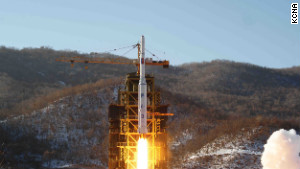
After the United Nations Security Council imposed further sanctions against the North for its launching of a three-stage rocket in December and its third nuclear test in February, North Korea has appeared to harden its stance considerably. It said it would never negotiate away its nuclear weapons arsenal, but would instead expand it. On Tuesday, it declared that it would restart a nuclear reactor that gave it a small stockpile of plutonium and would readjust its uranium-enrichment plant for weapons efforts.
Photographs published Wednesday on the Web site 38 North, which follows North Korean developments, show new construction at the aging reactor, dating back several weeks. Once operational, the reactor can produce one bomb’s worth of plutonium a year.
The Pentagon’s decision to deploy a new missile defense system to Guam now is the latest in a series of steps intended to deter the North from either military action or new missile tests.
Earlier this week, the Defense Department announced that two of the Navy’s Aegis-class missile defense warships were positioned in the Pacific to monitor North Korea. Installing the land-based missile system in Guam will free up the ships, which have radar and interceptor missiles, to be repositioned closer to the North Korean coast. That would give President Obama a wider range of options if the North Koreans fire their missiles in a test or at a target.
“We haven’t made any decisions,” a senior administration official said. “But we want as many options as possible.”

Friday, March 8, 2013

North Korea vows end to nonaggression pacts after U.N. vote


(CNN) -- North Korea on Friday responded to tougher sanctions from the U.N. Security Council with another barrage of vitriol, repeating a vow to ditch all nonaggression pacts with the South.
A day after the isolated regime in Pyongyang had threatened a possible "preemptive nuclear attack" -- something analysts say they think it is unlikely and currently unable to do -- its official news agency reeled off a number of agreements with South Korea that it said would no longer apply.
It's the latest installment in a week of furious rhetoric from the North, fueled by its anger over the U.N. vote on the new sanctions, a response to the Pyongyang's recent nuclear test, and joint military drills by the United States and South Korea, which take place in the region each year.
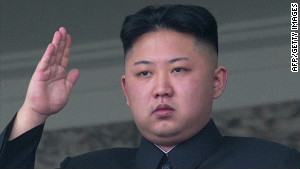
North Korea watchers and U.S. officials say that the recent frenzy of ominous language from North Korea under its young leader Kim Jong Un makes the situation on the Korean Peninsula more worrying and unpredictable.

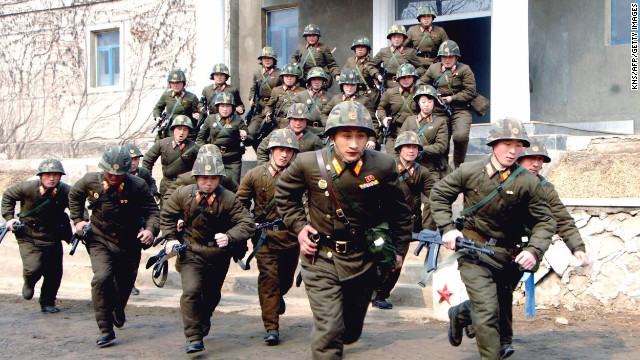
Photos: Kim Jong Un and North Korea's militaryPhotos: Kim Jong Un and North Korea's military

North Korea at it again with threats

Anger from North Korea over sanctions

What to make of North Korea's newest threat
South Korea has warned the North that it will retaliate strongly and sternly if its citizens are threatened.
"This surge in provocative rhetoric is particularly dangerous," said Michael Auslin of the American Enterprise Institute. "South Korea's new president (Park Geun Hye) can't be seen to back down in the face of the North's threats, while Kim Jong Un may feel that his successful missile and nuclear tests give him the ability to keep pressuring Seoul. The two may wind up talking themselves into conflict."
South Korean President Park Geun-hye, who took office late last month, said Friday that Seoul would respond strongly to any provocation from Pyongyang, the semiofficial news agency Yonhap reported.
The possibility of flare up was highlighted by the Washington-based Center for Strategic and International Studies, which predicted a provocative move from the North "in the coming weeks."
The center said that according to its research, Pyongyang has carried out "a military provocation of some form within weeks of every South Korean presidential inauguration dating back to 1992."
A military clash could risk drawing in the United States, which has about 28,500 troops stationed in South Korea as part of the security alliance between the two countries.
The most recent skirmish between the two Koreas took place in November 2010, when the North shelled an island on the South's side of the border, killing several people. Pyongyang claimed Seoul had provoked it by carrying out training exercises off their shared coast.
A week of strong threats
The North's comments Friday doubled down on statements it had made earlier this week, promising to abolish the armistice agreement that stopped the Korean War in 1953, and threatening strikes on the United States and South Korea.
Claiming its enemies are "hell bent on confrontation and war fever," Pyongyang said it was now revoking "all agreements on nonaggression reached between the north and the south," a declaration it has made in previous years
It also said it was nullifying the joint declaration on the denuclearization of the Korean Peninsula. The North, which conducted its third underground nuclear test last month, had said recently that denuclearization of the region was "impossible" because of what it described as the United States' hostile policy toward it.
And it stated that it was immediately cutting off the "north-south hotline," three days after it had already said it planned to terminate its military telephone line with the United States.
The phone line is meant to serve as a tool to defuse potential flash points along the heavily militarized border between the two Koreas.
But Andre Kok, deputy public affairs officer for U.S. Forces in Korea, said that reports of the North's Korean People's Army (KPA) cutting off communication often arise when military training exercises are taking place, as they are at the moment.
"When we place a call on the direct phone line and the KPA does not answer, we have no way of knowing if the KPA has actually disconnected the phone lines or are just not answering the phone," he said.

Tensions high on Korean peninsula

China signs on to North Korea sanctions

North Korea's nuclear ambitions

U.N. toughens sanctions on North Korea
New U.N. measures
Tensions are particularly high at the moment because of the new measures against the North adopted unanimously Thursday by the U.N. Security Council.
"These sanctions will bite, and bite hard," U.S. Ambassador to the United Nations, Susan Rice, said after the vote.
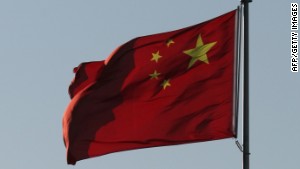
China, North Korea's key ally, could have used its veto power to block the sanctions. Instead, after weeks of negotiating, it signed on to the final draft.
"China is a country of principle," China's U.N. Ambassador Li Baodong said. "We are firmly committed to safeguarding peace and stability on the Korean peninsula."
On Friday, China's Foreign Ministry called upon "all relative parties to stay calm and refrain from taking actions that may escalate tension." Spokeswoman Hua Chunying reiterated China's support for the sanctions, which have stoked Pyongyang's fury.
The goal of the new sanctions is to stymie the activities of North Korean banks and cash couriers who might be funneling money to the secretive regime's nuclear and missile programs.
It will be tougher for the regime to move large sums of cash stuffed into suitcases, Rice said.
The U.N. resolution also outlines measures to step up scrutiny of suspicious sea shipments and air cargo. And it expands restrictions to encompass several institutions and senior officials in the North's weapons industry, as well as a range of materials and technology known to be used in uranium enrichment.
It also blocks the sale of luxury goods -- such as yachts and certain high-end jewelry -- to North Korea.
"As a result, North Korea's ruling elite, who have been living large while impoverishing their people, will pay a price" for the ongoing nuclear activities, Rice said.
Questions over sanctions' effectiveness
Some doubt whether the new measures will make much difference.
Sanctions imposed after previous nuclear tests and rocket launches have failed to deter Pyongyang.
China will go a long way toward determining whether the new sanctions really do have "bite," analysts say.
"As long as China allows North Korea to operate, as long as China provides food, energy assistance, and investment, the sanctions really don't matter," said Doug Bandow of the Cato Institute.
North Korea notoriously allows many of its people to live in malnutrition and starvation. Still, the country needs a functioning economy, partly to finance its military, Bandow explained.

Thursday, January 24, 2013

North Korea Vows More Nuclear Tests Targeting U.S.


North Korea Threatens More Nuclear Tests, Warns U.S.


In a bellicose statement singling out the United States as the "sworn enemy" of the Korean people, North Korea today announced plans for a third nuclear test and continued rocket launches.
The move is seen as a disappointment to those who hoped the country's new leader, Kim Jong-Un, might take a less aggressive path than his predecessor and father, Kim Jong-il.
It is also seen as a direct challenge to President Obama and South Korea's newly elected president, Park Geun-hye, who takes office next month.
The statement from North Korea's National Defense Commission read:
"Settling accounts with the U.S. needs to be done with force, not with words as it regards jungle law as the rule of its survival."
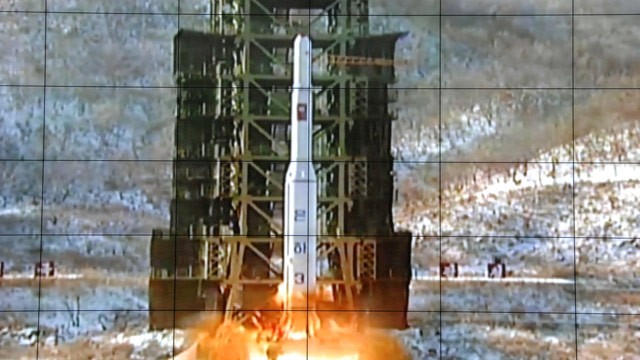
PHOTO: A screen at the General Satellite Control and Command Center shows the moment North Korea's Unha-3 rocket is launched in Pyongyang, North Korea,  Wednesday, Dec. 12, 2012.
AP Photo
A screen at the General Satellite Control and... View Full Size
North Korea Targets U.S. With Nuclear Test Talk Watch Video
North Korea Launches Missile After 4 Failed Attempts Watch Video
North Korea Fires Long-Range Missile Watch Video
The renewed threats come in response to the U.S. backed resolution tightening sanctions against North Korea after its December rocket launch.
At that time, North Korea repeatedly insisted that the launch was simply part of its peaceful space program. The recent statement made no mention of that.
It read: "We are not disguising the fact that the various satellites and long-range rockets that we will fire and the high-level nuclear test we will carry out are targeted at the United States."
South Korean officials analyzed debris from the December launch that, they say, indicates North Korea built and tested crucial components for a missile that can fly further than 6,200 miles.
Analysts say that preparations at the Pungyee test site in northeastern North Korea are underway and that a new underground test could take place on short notice.
Within the international monitoring community it is not believed that North Korea currently has the capability to launch a long-range rocket with the capacity to reach the United States or the technology to mount a nuclear warhead on a long-range missile. But the U.S. is not pleased with North Korea's plans. Glyn Davies, the top U.S. envoy to the region, said in Seoul, "We hope they don't do it. We call on them not to do it."
China, North Korea's main ally in the region, is also urging restraint. China backed the U.S. resolution at the United Nations and today the Foreign Ministry cautioned North Korea not to take further steps to increase tension.